
Introduction to Security Services
Security services are crucial for safeguarding property, individuals, and assets. Among the various types of security measures available, two predominant forms stand out: mobile patrol and static guard services. Understanding these two approaches is essential for determining the most suitable security solution based on specific needs and circumstances.
Mobile patrol refers to security personnel who traverse a designated area in vehicles, serving to monitor and deter potential criminal activities. This proactive approach provides a dynamic form of security that can cover larger areas in relatively short periods. Mobile patrol officers conduct regular checks, respond to incidents, and provide a visible deterrent to would-be offenders. Their ability to travel allows them to adapt quickly to emerging threats, as well as to secure various sites within a broad region.
On the other hand, static guard services involve security personnel stationed at a specific location, providing a fixed presence. This traditional approach to security can be crucial in environments where controlled access, monitoring of entry and exit points, or direct interaction with the public is necessary. Static guards can enforce rules, conduct ID checks, and manage safety protocols effectively. Their presence often fosters a sense of security among employees, visitors, and clients alike.
In summary, mobile patrol and static guard services each offer distinct benefits tailored to various security needs. By understanding these two primary types of security services, businesses and individuals can make informed choices about protecting their properties and ensuring safety. The ongoing comparison and evaluation of these approaches will address their respective strengths and weaknesses in the following sections.
Defining Mobile Patrol
Mobile patrol security refers to a proactive approach in managing safety and security through the deployment of personnel who move throughout a designated area rather than remaining static at a single location. This mobile security strategy typically involves trained security officers utilizing vehicles or bicycles to patrol properties, providing a visible presence that deters criminal activity and enhances safety.
Subscribe to CHARLES GROUP SECURITY LTD!
Get updates on the latest posts and more from CHARLES GROUP SECURITY LTD straight to your inbox.I agree to my personal data being used for interest-based advertising as outlined in the Privacy Notice and the Ad Partner page.Subscribe
The characteristics of mobile patrol include regular driving or walking routines within set boundaries, frequent check-ins at specified locations, and a quick response capability to incidents or alarms. Security personnel are often equipped with communication devices to report any suspicious activity or emergencies, ensuring rapid action can be taken when necessary.
Typical duties of mobile patrol units encompass monitoring of premises, conducting security assessments, checking for potential hazards, performing access control, and ensuring compliance with safety regulations. These services can be crucial for a variety of environments including commercial properties, residential communities, schools, and industrial sites, where their ability to cover large areas efficiently enhances overall security measures.
One of the primary advantages of mobile patrol is the increased flexibility it offers compared to static guarding. This approach can adapt to various security needs and settings, ensuring that patrols can be tailored to address specific concerns or risks. Furthermore, the presence of moving security personnel often acts as a deterrent to potential offenders. However, some disadvantages may include challenges in maintaining continuous surveillance and the potential for delayed response times if an incident occurs further away from the mobile unit. Overall, understanding the implications of mobile patrol can significantly aid organizations in determining if this method aligns with their security objectives.
Defining Static Guard
Static guard services are a vital component of the security landscape, providing a range of protective measures in various environments. These professionals are stationed at designated locations, such as corporate offices, residential complexes, event venues, and critical infrastructures. Unlike their mobile counterparts, static guards remain fixed at a specific site, allowing for constant surveillance and rapid response to potential threats.
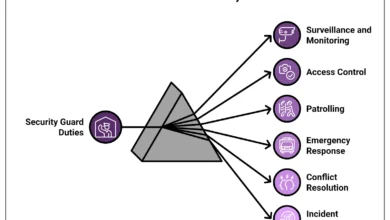
The primary responsibilities of static guards typically include monitoring entrances and exits, conducting regular patrols within the premises, and managing access control, ensuring that only authorized personnel enter sensitive areas. Furthermore, they are tasked with reporting any suspicious behavior or incidents to the appropriate authorities, reinforcing safety protocols, and even providing assistance during emergencies.
Static guard services are particularly beneficial in contexts where a relentless presence is necessary to prevent unauthorized access and mitigate risks. Industries such as retail, healthcare, and education frequently employ static guards to uphold safety and security. Additionally, their visibility alone often acts as a deterrent to potential criminal activity, thereby enhancing overall safety.
However, there are inherent drawbacks to static guarding. One significant concern is the possibility of complacency; long hours at a single location can lead to fatigue, which could compromise the effectiveness of surveillance. Moreover, static guards may lack the flexibility to respond swiftly to incidents occurring beyond their immediate vicinity. Hence, while they serve crucial roles in security operations, it is essential to weigh their limitations cautiously.
Comparison of Effectiveness
When evaluating the effectiveness of mobile patrols versus static guards, several factors must be considered, including incident response rate, deterrence capability, and overall crime prevention impact. Mobile patrols typically involve security personnel patrolling a designated area in vehicles, allowing them to cover larger expanses and respond quickly to incidents. This mobility can facilitate a faster response to emergencies or suspicious activities, which is crucial in high-risk environments. By being able to navigate different locations, mobile patrol units can ensure a more dynamic presence, effectively diminishing potential threats in multiple areas.
On the other hand, static guards maintain a fixed position, serving as a physical presence in a specific location. This fixed presence can be advantageous in areas where a constant watch is necessary, such as at entrances, sensitive zones, or valuable asset locations. Static guards can engage with visitors, maintaining a visible deterrent effect against criminal activities. Their presence often enables them to observe and report incidents immediately but may limit their ability to address multiple incidents occurring simultaneously across a broader area.
The deterrence factor varies significantly between the two approaches. Mobile patrols may project a more extensive blanket of security, which can dissuade potential criminals from targeting locations within the patrol route. In contrast, static guards create a strong presence that can enhance feelings of safety among employees and clients and facilitate immediate responses to specific incidents.
Ultimately, the effectiveness of mobile patrols versus static guards may vary according to the unique requirements of a given environment. Each strategy has distinct advantages and limitations that warrant careful consideration when determining the optimal security arrangement for a particular venue or incident pattern.
Cost Analysis
When evaluating security options, understanding the financial implications of mobile patrol versus static guard services is paramount. Each option presents unique costs associated with labor, equipment, and operational expenditures that can significantly impact an organization’s budget.
Mobile patrol services often incur higher labor costs, as these guards cover larger areas and require more personnel to ensure adequate coverage. Typical expenses include salaries, training, and benefits, which can fluctuate based on the number of patrols required and their frequency. Moreover, operational costs such as vehicle maintenance, fuel, and mobile communication devices are bundled into the overall expense, reflecting the dynamic nature of this security service.
Subscribe to CHARLES GROUP SECURITY LTD!
Get updates on the latest posts and more from CHARLES GROUP SECURITY LTD straight to your inbox.I agree to my personal data being used for interest-based advertising as outlined in the Privacy Notice and the Ad Partner page.Subscribe
Conversely, static guard services generally present a more predictable cost structure. The primary expenses relate to the salaries of the guards stationed at specific locations. These costs tend to be lower than mobile patrol services as the staffing requirements are usually less. However, other factors such as overtime compensation may arise if more coverage is necessary beyond standard hours. Additionally, static guard stations might require fewer logistical investments, leading to reduced operational expenditures.
It’s also essential to consider the potential cost savings that may arise from each security model. For instance, organizations with extensive properties might find mobile patrol more cost-effective in preventing incidents and responding swiftly to security breaches. In contrast, businesses requiring constant monitoring might benefit from a static guard model, as having a dedicated presence can deter theft and vandalism more effectively.
Ultimately, the choice between mobile patrol and static guard services will depend on various factors, including the size and nature of the property, specific security needs, and budgetary constraints. A thorough cost analysis that considers both short-term and long-term implications will aid organizations in making the most informed decision regarding their security investment.
Versatility and Flexibility
In assessing the versatility and flexibility of security methodologies, it is essential to understand how mobile patrol and static guard services cater to a diverse array of security needs. Mobile patrol officers are trained to be adaptive, enabling them to swiftly respond to varying scenarios. This adaptability is one of the key attributes that set mobile patrol apart from the more structured static guard services, which can often be confined to a designated area.
Mobile patrol security personnel have the capability to cover large areas, allowing them to monitor and protect multiple locations in a timely manner. Their ability to respond to incidents, conduct regular checks, and perform safety assessments in different environments makes them particularly valuable in high-risk or fluctuating situations. For instance, in industries such as retail and logistics where foot traffic can vary, the use of mobile patrols can significantly enhance security by providing a visible deterrent while ensuring that all areas are monitored effectively.
On the contrary, static guard services tend to offer a different form of security based on a fixed post within a given premises. While this approach provides stability and consistency, especially in environments such as banks and corporate offices, it lacks the dynamic adaptability that mobile patrols can offer. In instances of emergencies such as fires or security breaches, static guards may have limitations in their response capability, as they are restricted to their assigned location. Each method serves its purpose, yet when versatility and flexibility are paramount, mobile patrols often emerge as the more beneficial option, appealing to businesses that require responsiveness and varied engagement with potential security threats.
Client Needs and Considerations
When evaluating security options, client needs are pivotal in determining whether a mobile patrol or a static guard service is appropriate. Understanding the unique requirements of a facility can significantly influence the choice of security measures. One of the primary factors clients should consider is the type of facility being secured. For instance, commercial buildings, residential complexes, and industrial sites each present different security challenges and potential threats.
Another critical aspect to analyze is the nature of security threats the facility may face. A location prone to vandalism or theft may benefit from the vigilant presence of static guards, who can deter criminal activity through their mere presence. Conversely, facilities located in areas with more extensive grounds may require mobile patrols, which can cover more ground and address various vulnerabilities effectively.
Subscribe to CHARLES GROUP SECURITY LTD!
Get updates on the latest posts and more from CHARLES GROUP SECURITY LTD straight to your inbox.I agree to my personal data being used for interest-based advertising as outlined in the Privacy Notice and the Ad Partner page.Subscribe
Additionally, clients must consider specific operational needs, including the hours of operation and peak activity times. While static guards provide consistent monitoring, mobile patrols can offer calculated flexibility in response to different scenarios throughout the day and night. This aspect is crucial for businesses that operate 24/7 and need security personnel who can adapt to fluctuating security demands.
Moreover, the budgetary constraints of a client play a significant role in this decision-making process. Static guards tend to incur higher costs due to their fixed presence, while mobile patrols may present a more economical alternative, especially for larger properties. Clients should also assess any existing security measures and the extent of integration needed, as a cohesive security strategy often involves both patrols and guards working in conjunction.
Ultimately, a comprehensive understanding of client needs, facility type, threat assessment, and budget will guide the choice between mobile patrols and static guards, ensuring that the most effective security strategy is implemented.
Technology Integration in Security
In an era where technological advancements are revolutionizing various sectors, the field of security services is no exception. Both mobile patrol and static guard services have embraced modern technology to enhance their operational efficiency and effectiveness. Surveillance tools, communication equipment, and other technological innovations play a pivotal role in shaping the future of both security approaches.
One of the most significant enhancements in security services is the use of advanced surveillance systems. Mobile patrol units are increasingly equipped with high-definition cameras and drones, which enable them to monitor large areas efficiently and provide real-time feedback to their control centers. These tools not only improve situational awareness but also assist in identifying potential security threats promptly. Similarly, static guards benefit from integrated surveillance systems, allowing them to maintain vigilance over a designated area with the aid of closed-circuit television (CCTV) and motion detection cameras.
Moreover, communication equipment has seen substantial improvements. Both mobile patrol and static guards utilize smartphones and two-way radios that allow for instant communication between personnel and their command centers. This real-time communication is crucial for quickly addressing incidences, deploying resources strategically, and maintaining safety protocols. For mobile patrols, GPS technology provides location tracking, enabling efficient route planning and timely responses to alarms or incidents.
Additionally, analytical software is increasingly being integrated into security services, supporting them in crime prevention and resource allocation. Through data collection and analysis, security personnel can identify crime trends and hotspots, leading to more effective patrol strategies and improved on-site responses. Overall, the synergy between technology and security services not only enhances the overall effectiveness of mobile patrols and static guards but also ensures a higher level of safety for the communities they serve.
Final Thoughts and Recommendations
When it comes to securing assets and ensuring safety, the choice between mobile patrols and static guards is crucial. Both methods have unique advantages and limitations that cater to different security needs. Mobile patrols offer the benefit of flexibility and area coverage, allowing for dynamic responses to incidents. They are particularly effective in larger properties or those with multiple entry points where potential threats can emerge from various angles.
Subscribe to CHARLES GROUP SECURITY LTD!
Get updates on the latest posts and more from CHARLES GROUP SECURITY LTD straight to your inbox.I agree to my personal data being used for interest-based advertising as outlined in the Privacy Notice and the Ad Partner page.Subscribe
In contrast, static guards provide a consistent, visible presence that can deter criminal activities. They excel in environments where the key concern is maintaining order in a defined location, such as retail sites or events. The presence of a static guard can significantly enhance the perceived level of security, often leading to a decrease in undesirable incidents.
When considering which option to choose, it is essential to evaluate the specific needs of the environment. For businesses that require flexibility and rapid reaction capability to emergencies, mobile patrols may be the ideal choice. In settings where the image of security is paramount, or where visitors require assistance or information, static guards are more appropriate.
Ultimately, a combination of both mobile patrols and static guards can provide a comprehensive security solution, maximizing coverage and response time while maintaining a strong deterrent presence. Therefore, organizations should conduct a thorough assessment of their security requirements, taking into account factors such as location, size of the property, nature of the assets, and budget considerations. By doing so, stakeholders can make informed decisions that cater to their unique circumstances and enhance the overall security strategy.