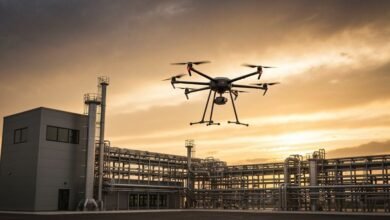

Artificial intelligence (AI) has emerged as a transformative force across various sectors, and its application in security systems is no exception. In the realm of surveillance, AI technologies are increasingly leveraged to enhance the efficiency and effectiveness of security measures. By integrating AI into surveillance systems, operators can analyze vast amounts of data in real-time, enabling rapid decision-making and improved situational awareness. This is particularly pertinent in the UK, where concerns regarding public safety and security are paramount.
At its core, AI refers to the simulation of human intelligence processes by machines, particularly computer systems. These processes include learning, reasoning, and self-correction. In the context of security, AI systems are equipped with capabilities such as facial recognition, anomaly detection, and behavior analysis, which bolster traditional surveillance methods. For instance, AI-driven cameras can identify individuals by analyzing their facial features, thereby aiding law enforcement in locating persons of interest swiftly.
Moreover, the adoption of AI in security is not limited to facial recognition. It extends to predictive analytics, where algorithms predict potential security threats based on historical data patterns. This proactive approach allows security personnel to address risks before they escalate into incidents. As surveillance systems become more sophisticated, the reliance on AI grows, highlighting its critical role in modern security strategies. The integration of these advanced technologies signifies a significant shift from conventional surveillance methods, underscoring the urgency for stakeholders in the UK to adapt and implement AI-driven solutions to safeguard public spaces effectively.
Current Landscape of Surveillance in the UK
The United Kingdom has long been recognized as one of the most surveilled nations in the world, a status underscored by the extensive use of closed-circuit television (CCTV) cameras. According to recent estimates, there are approximately 6 million CCTV cameras operational throughout the country, resulting in a ratio of about one camera for every 11 individuals. This extensive network of cameras forms the backbone of the UK’s surveillance infrastructure, aimed at preventing crime and enhancing public safety.
In addition to traditional CCTV, the UK is increasingly incorporating sophisticated monitoring technologies such as facial recognition systems and artificial intelligence-driven analytics. These advancements aim to improve the efficiency and effectiveness of surveillance practices. The integration of AI allows for real-time analysis of video footage and faster identification of potential threats, thus changing the landscape of security monitoring.
Despite these technological advancements, the current landscape of surveillance in the UK is closely governed by legislation aimed at protecting individual privacy rights. The Data Protection Act 2018 and the accompanying General Data Protection Regulation (GDPR) set stringent guidelines regarding the collection and use of personal data, including data captured through surveillance technologies. These legislative frameworks ensure that the deployment of surveillance systems is balanced with the protection of citizens’ rights.
Public sentiment regarding surveillance practices in the UK is varied and often polarized. While many citizens acknowledge the role of surveillance in reducing crime rates and improving community safety, there are significant concerns regarding invasions of privacy and potential misuse of collected data. Surveys indicate that a substantial segment of the population is wary of the implications of widespread surveillance, highlighting an important dialogue about the need for transparency and accountability in the use of these technologies.
How AI Enhances Surveillance Technologies
The integration of artificial intelligence (AI) into surveillance technologies has brought significant advancements that transform how security measures are implemented. One of the most notable improvements is in the realm of facial recognition systems. Utilizing machine learning algorithms, these systems can quickly and accurately identify individuals from a database, even in crowded environments. This capability greatly enhances the efficiency of identity verification processes in public spaces such as airports, shopping centers, and events.
Beyond facial recognition, AI also plays a pivotal role in behavior analysis, which monitors and interprets human actions in real-time. This technology can assess patterns of behavior, identifying unusual activities that may indicate potential threats. For example, security personnel can be alerted to suspicious behavior, such as loitering or rapid changes in crowd dynamics, allowing for timely intervention before incidents escalate.
Moreover, anomaly detection powered by AI enhances the capability of surveillance systems to identify irregular occurrences that deviate from established norms. By analyzing vast amounts of data collected from various sensors, these systems can learn what constitutes typical activity in a given area and flag any anomalies for further investigation. This predictive capability not only improves the effectiveness of surveillance measures but also assists law enforcement agencies in proactively addressing security concerns.
Furthermore, the adaptability of AI algorithms allows these systems to continually improve over time. Through ongoing learning and refinement, AI can adjust to changing environments and emerging patterns of criminal behavior, thus maintaining high standards of security vigilance. Overall, the fusion of AI with surveillance technologies illustrates the potential to create safer public spaces through enhanced observation and response mechanisms, representing a significant step forward in the evolution of security measures.
Potential Benefits of AI in Security
The integration of Artificial Intelligence (AI) into security systems presents a range of significant benefits that enhance the effectiveness and efficiency of surveillance processes. Firstly, AI can dramatically improve monitoring capabilities. Traditional security systems often rely on human operators to analyze video feeds, which can be labor-intensive and prone to error, especially in high-density environments. AI algorithms, specifically designed to process visual data, can continuously monitor these feeds with a high degree of accuracy, identifying suspicious behaviors and activities in real time.
Additionally, AI-enhanced security systems are capable of processing vast amounts of data and detecting anomalies that would otherwise go unnoticed by human observers. By employing machine learning techniques, AI can learn from past incidents and refine its predictive analysis to improve threat detection. For instance, by analyzing past surveillance footage and correlating this with other data sources, AI can highlight patterns that might indicate potential security breaches, allowing security personnel to prepare proactively.
Another considerable advantage of AI in security is its ability to respond rapidly during emergencies. In situations where every second counts, AI systems can trigger alerts or initiate preventive measures, significantly reducing response times compared to manual intervention. Furthermore, AI can facilitate the coordination of security responses through communication with various emergency services, improving overall emergency management. These AI systems can prioritize alerts based on the severity of detected events, ensuring that human operators focus first on the highest risk situations.
Overall, the implementation of AI in security systems offers transformative potential, resulting in not only enhanced situational awareness but also a more efficient allocation of resources, ultimately contributing to safer environments across the UK.
Challenges and Concerns with AI Surveillance
The implementation of artificial intelligence (AI) in surveillance has raised several ethical and legal challenges, primarily centered around privacy, bias, and civil liberties. One of the significant concerns is the intrusion into individual privacy. AI surveillance technologies, such as facial recognition systems and predictive policing algorithms, can collect vast amounts of data almost instantaneously. This can lead to the erosion of personal privacy as citizens become subject to constant monitoring. The collection of biometric data poses further risks, particularly if such data is not protected effectively from misuse or breaches.
Additionally, the potential for bias in AI algorithms is a crucial concern that cannot be overlooked. Many AI systems are trained on historical data, which may contain inherent biases reflecting societal inequalities. If these biases are not addressed, there is a significant risk that AI surveillance could perpetuate discrimination against certain groups, leading to unfair targeting and unjust outcomes. The reliance on biased algorithms can harm marginalized communities, undermining the ethical foundations of justice and equality.
The implications of widespread monitoring on civil liberties are profound. The normalization of surveillance practices could lead to a chilling effect on free speech and dissent, as individuals may feel that their actions and opinions are being scrutinized. As AI in security continues to evolve, the balance between safety and the right to freedom must be carefully navigated. Policymakers and technologists must collaborate to create robust guidelines that address these challenges. Effective regulations should not only govern the deployment of AI surveillance but also protect individuals’ rights while ensuring security needs are met.
Case Studies of AI Surveillance in the UK
The implementation of AI-driven surveillance systems in the UK has been a topic of considerable interest and debate. Several notable case studies illuminate the diverse applications of this technology, showcasing both promising outcomes and challenges faced during deployment.
One significant initiative took place in London’s public transport system, where AI surveillance systems were integrated to enhance passenger safety. These systems utilize facial recognition and behavior analysis algorithms to identify individuals engaged in suspicious activities. The Metropolitan Police reported a 20% reduction in crime rates within transport hubs following the implementation of these AI technologies. However, concerns surrounding privacy rights and the ethical implications of real-time monitoring have sparked discussions among civil liberty organizations, emphasizing the need for transparent policies surrounding data usage.
In contrast, the city of Manchester launched an AI-supported street camera project aimed at reducing urban crime. This initiative involved the collaboration of local authorities and technology firms to deploy AI software capable of analyzing vast amounts of surveillance footage to pinpoint areas with heightened criminal activity. While the project initially appeared successful in curbing street crimes, it faced backlash due to instances of false positives leading to unintended consequences, including unjustified actions against innocent individuals.
Another example can be observed in Liverpool, where an AI surveillance pilot program focused on monitoring public spaces and events. The city’s authorities intended to improve crowd management during large gatherings. Despite achieving some level of operational efficiency, the pilot encountered significant pushback from the community, emphasizing citizens’ concerns regarding excessive surveillance and the potential for misuse of collected data.
These case studies illuminate the complexities involved in AI surveillance implementation within the UK. They highlight both the potential benefits of enhanced security and the ethical dilemmas that accompany the use of advanced technology in public environments.
The Future of AI in Security and Surveillance
The integration of artificial intelligence (AI) in security and surveillance systems across the UK is rapidly evolving. As technological advances proliferate, we can expect a future where AI enhances the efficacy of security operations both in public and private sectors. Emerging technologies, such as machine learning, facial recognition, and predictive analytics, promise to significantly reshape how security measures are implemented and maintained.
One major trend anticipated in the coming years is the utilization of AI-driven algorithms to improve threat detection and response times. With the ability to analyze vast amounts of data in real-time, AI can assist security personnel by identifying suspicious behavior or patterns that may otherwise go unnoticed. Consequently, this capability could lead to a considerable reduction in crime rates and a heightened sense of safety in urban environments.
Moreover, innovations in drones and robotic surveillance systems are expected to take center stage. These technologies can provide a birds-eye view of public areas, offering proactive monitoring while minimizing the need for human presence in potentially dangerous situations. Such advancements not only maximize efficiency but can also extend surveillance to hard-to-reach locations, creating comprehensive security networks.
In addition to these developments, the ethical implications surrounding AI surveillance will continue to be a pressing topic. As the UK navigates this complex landscape, balancing the benefits of enhanced security against individual privacy rights will be paramount. The importance of establishing clear regulations and ethical guidelines for AI usage in surveillance cannot be overstated, ensuring that advancements serve public safety without encroaching upon civil liberties.
Ultimately, the future of AI in security and surveillance in the UK indicates a shift towards smarter and more responsive security solutions, poised to redefine how both public safety and security efficacy are approached in the years ahead.
Regulatory Framework and Policies
The use of artificial intelligence (AI) in surveillance has rapidly evolved, presenting both opportunities and challenges for regulation in the UK. Policymakers are currently faced with the task of developing frameworks that can effectively regulate AI technologies while fostering innovation. At present, various laws such as the Data Protection Act 2018 and the General Data Protection Regulation (GDPR) provide a foundation for privacy and data protection. These regulations mandate transparency, accountability, and user consent when it comes to data processing, which is crucial in surveillance contexts where personal data is often captured and analyzed.
Furthermore, the UK’s Information Commissioner’s Office (ICO) has issued guidance on how AI and data analytics can be employed in compliance with existing regulations. This guidance encourages organizations to adopt ethical considerations in their surveillance practices, influencing how data is collected, stored, and used. Additionally, there are ongoing discussions regarding the introduction of a new regulatory body specifically focused on AI oversight, which may address the unique challenges posed by autonomous surveillance systems.
The rapid advancements in AI also compel lawmakers to consider future regulations that encompass not only privacy rights but also ethical implications. For instance, the use of facial recognition technology has raised serious concerns about bias and discrimination, prompting calls for stricter regulations. As such, tailored legislation might emerge to govern AI surveillance more specifically, ensuring that systems are designed to be fair and secure.
In anticipation of future developments, stakeholders including the government, privacy advocates, and technology companies are engaged in dialogue aimed at establishing a balanced framework that both promotes innovation and protects civil liberties. Understanding this evolving regulatory landscape is essential for businesses and organizations looking to implement AI in their security practices.
Conclusion: Balancing Security and Privacy
The discussion surrounding the implementation of artificial intelligence in surveillance practices within the UK has highlighted significant tensions between enhancing security measures and preserving individual privacy. As we move forward into a digital age characterized by rapid technological advancements, the benefits of AI-driven security systems, such as improved threat detection and real-time response capabilities, must be carefully weighed against the potential infringements on civil liberties.
Throughout this exploration, we examined the potential that AI technologies hold to revolutionize surveillance practices across various sectors, from public safety to crime prevention. These innovations promise enhanced capabilities, such as the ability to analyze vast amounts of data and recognize patterns indicating potential threats. However, the reliance on sophisticated surveillance systems raises important ethical questions regarding data collection, user consent, and the potential for misuse of information.
Furthermore, the legal and regulatory landscapes surrounding surveillance technologies remain underdeveloped, necessitating a comprehensive framework that addresses concerns related to privacy rights while maintaining effective security measures. Policymakers are tasked not only with fostering an environment that encourages technological innovation but also with protecting citizens from overreach and surveillance abuses.
To achieve a delicate balance, stakeholders must engage in collaborative dialogue that includes government entities, technology experts, privacy advocates, and the public. This collaborative approach will help ensure that the implementation of AI in surveillance systems respects civil liberties while delivering the security enhancements that society demands. A well-regulated and transparent system will undoubtedly be fundamental in securing public trust and acceptance of these technologies.