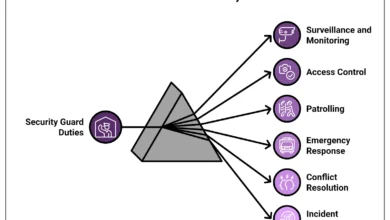

Introduction to Security Patrols
Security patrols play a vital role in safeguarding various environments, including commercial properties, residential areas, and public spaces. These patrols are designed to deter crime, provide a sense of safety, and respond swiftly to incidents. The significance of security in today’s society cannot be understated, as the need for protection against theft, vandalism, and other security threats continues to rise.
In essence, security patrols can be categorized into two main types: static and mobile. Static patrols involve personnel stationed at specific locations, frequently monitoring designated areas. This approach ensures that security personnel are always present to face potential threats and maintain a visible security presence. In contrast, mobile patrols involve security officers who actively roam the assigned areas in vehicles or on foot. This method allows for broader coverage and a dynamic approach to managing security risks.
The choice between static and mobile patrols depends largely on the requirements of the environment. Commercial properties, for instance, may benefit from the vigilance provided by static officers during business hours, while mobile patrols could enhance security during off-hours or in larger complexes. Similarly, residential areas may implement a combination of both patrol styles to ensure comprehensive coverage and community reassurance.
Understanding the nuances of these two types of security patrols is essential for effective risk management and crime prevention. Each method has its strengths, and the optimal choice often results from evaluating specific safety needs and identifying potential vulnerabilities. In this comparative assessment, we will delve deeper into the advantages and disadvantages of both static and mobile security patrols, aiding organizations and individuals in making informed decisions about their security strategies.
Understanding Static Security Patrols
Static security patrols are a vital aspect of a comprehensive security strategy, employing personnel who remain in a specific location to monitor activities and ensure safety. These patrols typically operate in high-traffic areas where security is paramount, such as the entrances of commercial buildings, reception lobbies, parking facilities, and event venues. The presence of security personnel in these key locations acts as a deterrent against potential criminal activity and unauthorized access.
The roles of security personnel in static positions are diverse and critical to the overall effectiveness of security operations. They are responsible for conducting routine checks, monitoring surveillance systems, and engaging with individuals entering the premises. Additionally, static security officers are trained to handle emergencies, assess risks, and respond effectively to incidents, ensuring that the environment remains secure.
One of the primary advantages of static security patrols is their heightened visibility. The mere presence of security personnel is often enough to deter criminal behavior and instill confidence among employees, visitors, and clients. This deterrent effect is enhanced when patrols are visible and active, creating a sense of safety in the monitored areas. Furthermore, static patrols facilitate immediate communication with local law enforcement and emergency services, ensuring a rapid response if needed.
In terms of surveillance effectiveness, static security patrols can conduct real-time assessments of their surroundings. This allows them to detect suspicious activities early and engage in proactive measures to prevent incidents from escalating. Moreover, the continuity of having personnel stationed at a fixed point fosters a familiarity with the site, enabling them to recognize anomalies and address situations with context-aware responses.
Understanding Mobile Security Patrols
Mobile security patrols offer a dynamic approach to safeguarding properties compared to their static counterparts. At the core of mobile patrols is the principle of movement; these patrols actively traverse designated areas using vehicles to monitor for irregularities and potential threats. Unlike static security personnel stationed at a single location, mobile patrols cover broader terrains, providing a more comprehensive security solution.
One of the significant advantages of mobile security patrols is their ability to implement randomized patrol routes. By varying their paths, security personnel can deter criminal activities, as unpredictability makes it challenging for potential wrongdoers to anticipate their movements. This randomness is essential in maintaining a proactive security posture, as it confounds those who might contemplate engaging in illicit acts, thereby enhancing overall security measures.
The role of vehicles in mobile security patrols cannot be overstated. Patrols utilize marked or unmarked vehicles equipped with modern surveillance tools and communication systems to respond swiftly to any incidents or alarms that may arise. This logistical convenience allows for greater flexibility in monitoring vast areas, such as industrial complexes, parking lots, and residential communities. Furthermore, vehicles enable security personnel to navigate quickly to different locations, ensuring that they can address any security concerns promptly.
Another critical benefit of mobile patrols is their high level of responsiveness. When alerts arise, mobile patrols can act much faster than static patrols, reaching the scene of an incident in a timely manner. This rapid response capability is crucial not only for crime prevention but also for emergency situations, where ensuring safety often depends on the speed of intervention. Additionally, the visibility of patrol vehicles can serve as a deterrent, contributing to a sense of safety among residents and employees alike.
Comparative Analysis: Pros and Cons of Static Patrols
Static security patrols represent a traditional approach to safeguarding properties and assets. Their implementation often brings with it a range of advantages that can enhance overall safety and security. One of the primary benefits is the cost-effectiveness of utilizing stationary personnel rather than multiple officers on the move. Static patrols can potentially reduce labor costs associated with mobile patrols, especially in environments where the threat level requires a consistent presence.
Employee engagement is another significant factor benefiting static security patrols. By having dedicated officers stationed at strategic locations, they foster a routine that promotes a sense of familiarity and trust among employees and visitors. This rapport can enhance the overall atmosphere of security, as individuals feel more comfortable under the watchful eyes of security personnel. Moreover, the constant vigilance afforded by static patrols may deter criminal activities more effectively as potential offenders recognize the presence of security.
However, there are notable limitations associated with static security patrols. One key disadvantage is the restricted coverage area. Unlike mobile patrols that can cover large territories and swiftly respond to incidents, static officers are confined to a specific location. This constraint can result in blind spots or delayed responses in emergency situations. Additionally, the flexibility of static patrols is limited since any change in duty assignment may require more time and administrative effort.
In real-world scenarios, environments with controlled access points, such as corporate offices or retail stores, often benefit from static patrols. However, in high-crime areas or expansive properties, the advantages of mobile security patrols may outweigh those of static units. Ultimately, organizations must weigh these pros and cons based on their specific needs to determine the most effective security strategy.
Comparative Analysis: Pros and Cons of Mobile Patrols
Mobile security patrols, as a dynamic approach to facility safety, offer both advantages and disadvantages compared to static options. One of the primary strengths of mobile patrols is their ability to cover larger areas more efficiently. This flexibility allows security personnel to monitor multiple locations within a designated timeframe, which is particularly beneficial for businesses with extensive properties or multiple sites. For instance, a shopping mall or an industrial complex can greatly benefit from mobile patrols, as these can traverse various points of interest, ensuring comprehensive surveillance.
Furthermore, mobile patrols tend to have a quicker reaction time when responding to incidents. Security personnel can quickly move to the exact location of a disturbance, rather than waiting for an issue to be reported at a static post. This can be crucial in situations where every second counts, such as during an emergency or a potential theft. Additionally, the presence of a mobile unit can serve as a deterrent to potential criminals, who may be less likely to commit a crime knowing that security officers are on the move.
However, mobile patrols are not without challenges. One notable downside is the potential for delays due to travel time. If an incident occurs at a location that is far from the mobile unit’s current position, valuable time may be lost while the patrol travels to the scene. This aspect can be particularly concerning for facilities that require immediate intervention. Moreover, the operational costs associated with mobile security patrols can be higher due to the need for vehicles and fuel, as well as the logistics of ensuring that personnel are adequately trained and equipped for varied patrols.
In conclusion, while mobile security patrols provide enhanced coverage and reaction capabilities, it is essential for organizations to weigh these benefits against potential travel delays and associated costs.
Situational Effectiveness of Each Type
When evaluating the situational effectiveness of static versus mobile security patrols, it is essential to consider various contexts in which these patrols operate. High-crime areas, for instance, often necessitate a more proactive security approach. In such environments, mobile security patrols can cover larger territories quickly, responding to incidents as they arise. Studies indicate that in urban settings with elevated crime rates, a mobile patrol reduces response times by up to 30% compared to static patrols. This capability makes them particularly effective in deterring crime through visible presence and rapid response.
Conversely, static patrols can be advantageous in well-defined areas such as shopping malls or office complexes, where the security personnel’s presence can act as a strong deterrent against potential criminal activities. Here, the constant visibility of static patrols allows for continuous monitoring of activities and the ability to engage more directly with patrons, thereby fostering a secure environment. According to recent statistics, properties with static security in low-crime areas witness a 25% reduction in petty theft incidents.
Additionally, during large public events, mobile patrols tend to be more effective. They can navigate crowds, monitoring for any unusual behavior while ensuring that various zones are secured. A case study conducted during a prominent festival demonstrated that mobile patrols could manage crowd control and emergency situation responses more efficiently than static positions, significantly enhancing overall safety.
On the other hand, small properties may benefit more from static patrols, where concerns about security can be addressed comprehensively without the need for extensive roaming. The choice between static and mobile security patrols is therefore context-dependent, requiring an assessment of specific needs, risks, and the environment in which the patrol will operate.
Technological Advances in Security Patrols
The landscape of security patrols is rapidly evolving, thanks to technological advancements that enhance both static and mobile operations. In recent years, integrating sophisticated surveillance systems has become a crucial component in security strategy. These systems include high-definition cameras and motion detectors that ensure real-time monitoring of designated areas. By using facial recognition software and advanced analytics, security personnel can detect unusual activities, significantly improving response times and threat mitigation.
Mobile applications also play a pivotal role in modern security patrols. These apps allow security personnel to track their patrol routes, log incidents in real real-time, and report suspicious activities. Furthermore, they can communicate directly with their team and control centers, improving coordination and surveillance efficiency. By utilizing GPS technology, mobile patrols can optimize their routes, ensuring that they cover the necessary grounds with minimal delays, leading to enhanced operational effectiveness.
Another noteworthy advancement is the use of drones in security operations. Drones equipped with high-resolution cameras can cover vast areas quickly and efficiently, providing aerial views that are typically unattainable from the ground. This capability is especially beneficial for monitoring large facilities, outdoor events, and critical infrastructures. Drones enhance the flexibility of mobile security patrols, allowing for immediate aerial assessments when incidents are reported. Consequently, the integration of these advanced technologies not only improves the efficacy of patrols but also contributes to a safer environment by ensuring proactive surveillance.
Cost Considerations in Choosing Security Patrols
When evaluating the financial aspects of security patrols, both static and mobile options present distinctive cost considerations that can significantly influence decision-making. Initially, the costs associated with implementing static security patrols can be relatively lower than their mobile counterparts. Static patrols typically require fewer resources, primarily staffing expenses, as they do not involve vehicle maintenance or fuel costs. However, this does not imply they are universally cheaper, as other variables—such as site size and the requirement for additional personnel for effective coverage—can lead to escalated expenses.
On the other hand, mobile security patrols involve higher upfront costs due to vehicles and logistics. The operational cost of maintaining a fleet, inclusive of fuel, maintenance, and insurance, can add up considerably over time. Additionally, these costs multiply when the patrol requires coverage for larger areas or multiple locations, necessitating more vehicles and personnel. Hence, when assessing mobile patrols, decision-makers must factor in these ongoing expenses against the level of security and flexibility they provide.
In the long term, the financial implications of selecting between static and mobile security patrols can be substantial. Although mobile patrols may incur higher costs initially, their ability to adapt to different environments and respond to incidents proactively can mitigate potential losses from theft or damage. Conversely, static patrols can foster a strong sense of security and deter criminal activity, potentially leading to lower insurance premiums and liability costs.
Ultimately, budget constraints play a critical role in the choice between static and mobile security patrols. Managers should consider a comprehensive analysis of both short-term and long-term effects on their financial resources while evaluating the overall security needs and expected outcomes of their particular environments.
Conclusion: Making the Right Choice
Choosing between static and mobile security patrols requires careful consideration of various factors including the specific environment of the premises, the level of risk involved, and the resources available for implementing a security solution. Each option offers distinct advantages that can cater to different needs. For businesses operating in high-crime areas, mobile security patrols may provide a proactive approach, enabling security personnel to cover larger areas and respond swiftly to incidents. On the other hand, static security patrols can create a sense of permanence and stability, which can be particularly effective in securing property or residential areas.
When evaluating the effectiveness of either type, it is crucial to assess the unique characteristics of the environment. For example, a large commercial facility might benefit more from mobile patrols due to the vast space that needs surveillance. Conversely, a small retail store might find static security effective due to the ability to deter theft and provide a direct line of sight to staff and customers.
Another consideration is the budget allocated to security measures. Mobile patrols may incur higher costs related to fuel, maintaining vehicles, and hiring personnel for round-the-clock coverage. Static patrols, while appearing more cost-effective, could limit the responsiveness to security threats throughout the property.
In conclusion, the best choice between static and mobile security patrols ultimately depends on an organization’s specific needs and circumstances. By taking into account the type of risks present, the layout of the property, and financial considerations, stakeholders can make an informed decision that optimizes their security strategy. Assessing the unique aspects of each option will guide businesses or residential communities toward the most effective solution that enhances safety and peace of mind.